14 hr
Taj Mahal Sunrise Tour from Delhi with Elephant Care Center Visit
- Expert local guide
- Small group
- Skip-the-line access
- Free cancellation
Vrindavan Tours — Banke Bihari Darshan & Braj Temple Routes
Morning bells over Goda Vihar, marble cool underfoot.
Compare fares, pick the fit — all bookings are mobile-voucher and eligible for free cancellation where shown.
14 hr
12 hr
12 hr
| Experience | Duration | Rating | Transfers | Pickup | Skip-the-line | Free cancel. | Price | |
|---|---|---|---|---|---|---|---|---|
|
Guided Experience
Most popular
Taj Mahal Sunrise Tour from Delhi with Elephant Care Center Visit
|
14 hr | ★ 5.0 | ✓ | ✓ | ✓ | ✓ | €30 | Book → |
|
Guided Experience
Mathura & Vrindavan Full-Day Tour: Krishna's Homeland
|
12 hr | ★ 4.4 | ✓ | ✓ | ✓ | ✓ | €47 | Book → |
|
Luxury / Private
Delhi to Agra & Vrindavan: Private Taj Mahal and Krishna Circuit Day Trip
|
12 hr | ★ 5.0 | ✓ | ✓ | — | ✓ | €27 | Book → |
For most Vrindavan Tours itineraries the two temples complement rather than replace each other: Banke Bihari suits pilgrims chasing the curtain-darshan rush, while ISKCON's open marble courtyards make it the calmer stop for families and first-time visitors.
|
Top pick Banke Bihari Temple |
ISKCON Sri Krishna Balaram Mandir | |
|---|---|---|
| Atmosphere and crowd density | Narrow lanes, dense, high-energy crowds | Spacious courtyards, calmer pacing |
| Darshan style | Curtain opens/closes repeatedly | Continuous open darshan, no curtain |
| Entry fee | Free | Free (donations optional) |
| Distance and travel time from Banke Bihari | On-site | ~2-4 km, 10-15 min drive |
| Facilities for families | Limited seating, crowded lanes | Guesthouse, restaurant, wide walkways |
| Typical visit duration | 20-40 minutes | 1-2 hours |
| See tickets & prices |
Verdict: Choose Banke Bihari tour for the intense, traditional curtain-darshan atmosphere, and ISKCON for a slower-paced, family-friendly darshan with more amenities on site.
Hand-picked experiences loved by thousands of travelers
4 - 12 hours
Free Cancellation
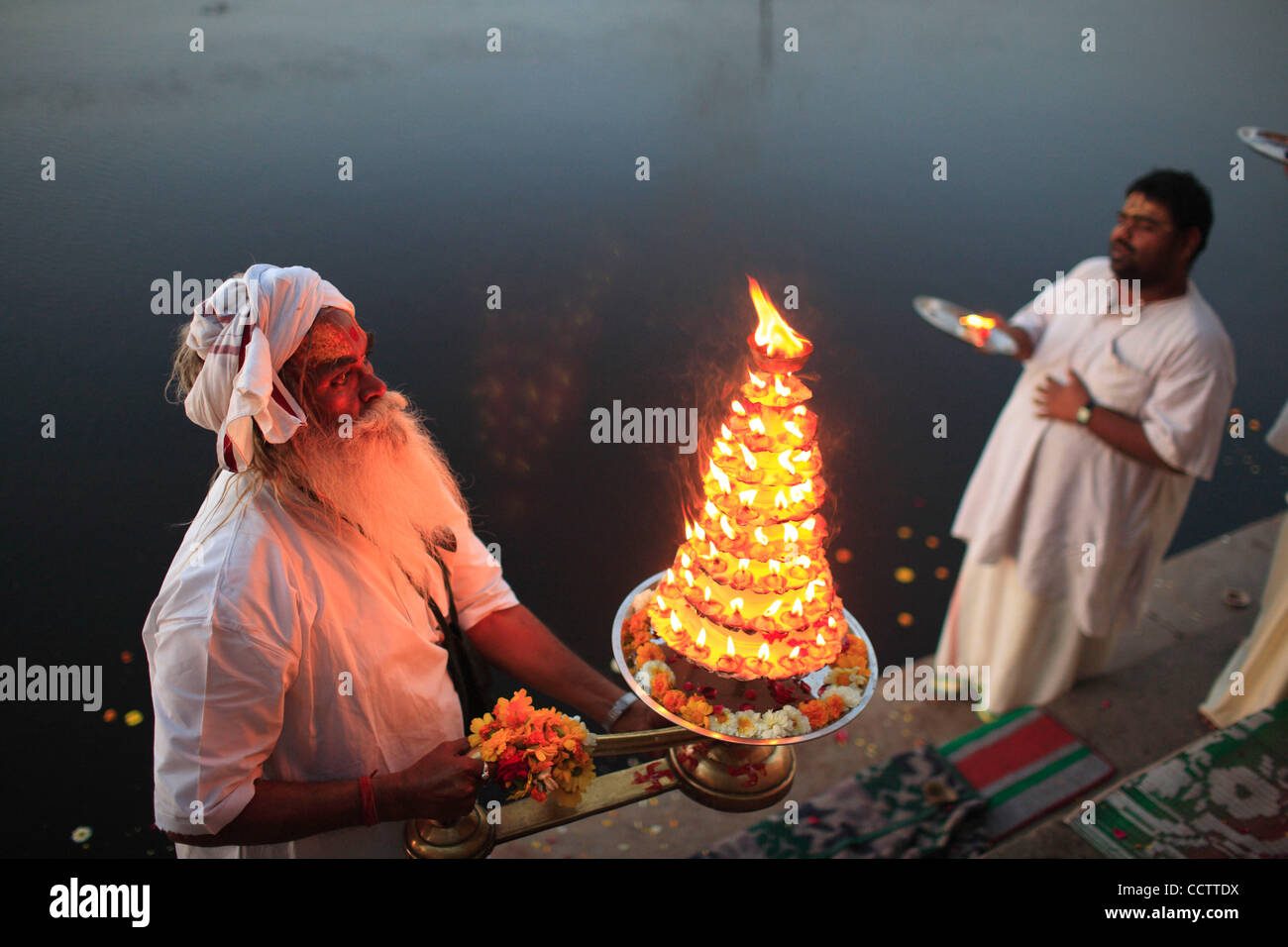
Private door-to-door day trip through Krishna's birthplace, temples, and the Yamuna Aarti.
1 day
Free Cancellation
Full-day private drive from Delhi to Mathura & Vrindavan's holiest Krishna temples and ghats.
8 hours
Free Cancellation
Journey through Krishna's birthplace with a guide, driver, and visits to six sacred temples.
10 hours
Free Cancellation
Full-day private journey through Krishna's homeland — sacred temples, a boat ride, and local flavors.
10 hours
Free Cancellation
A private guided day trip to Krishna's birthplace and Vrindavan's temples, in chauffeured SUV comfort.
Arrive via Goda Vihar approach lane and pass through the security frisking point
Move through the narrow corridor toward the sanctum as the morning session opens
Witness the curtain open and close in rhythmic glimpses of Bihari Ji
Collect footwear and step back into the outer courtyard and lanes
Walk the market lanes around the temple for prasad and devotional items
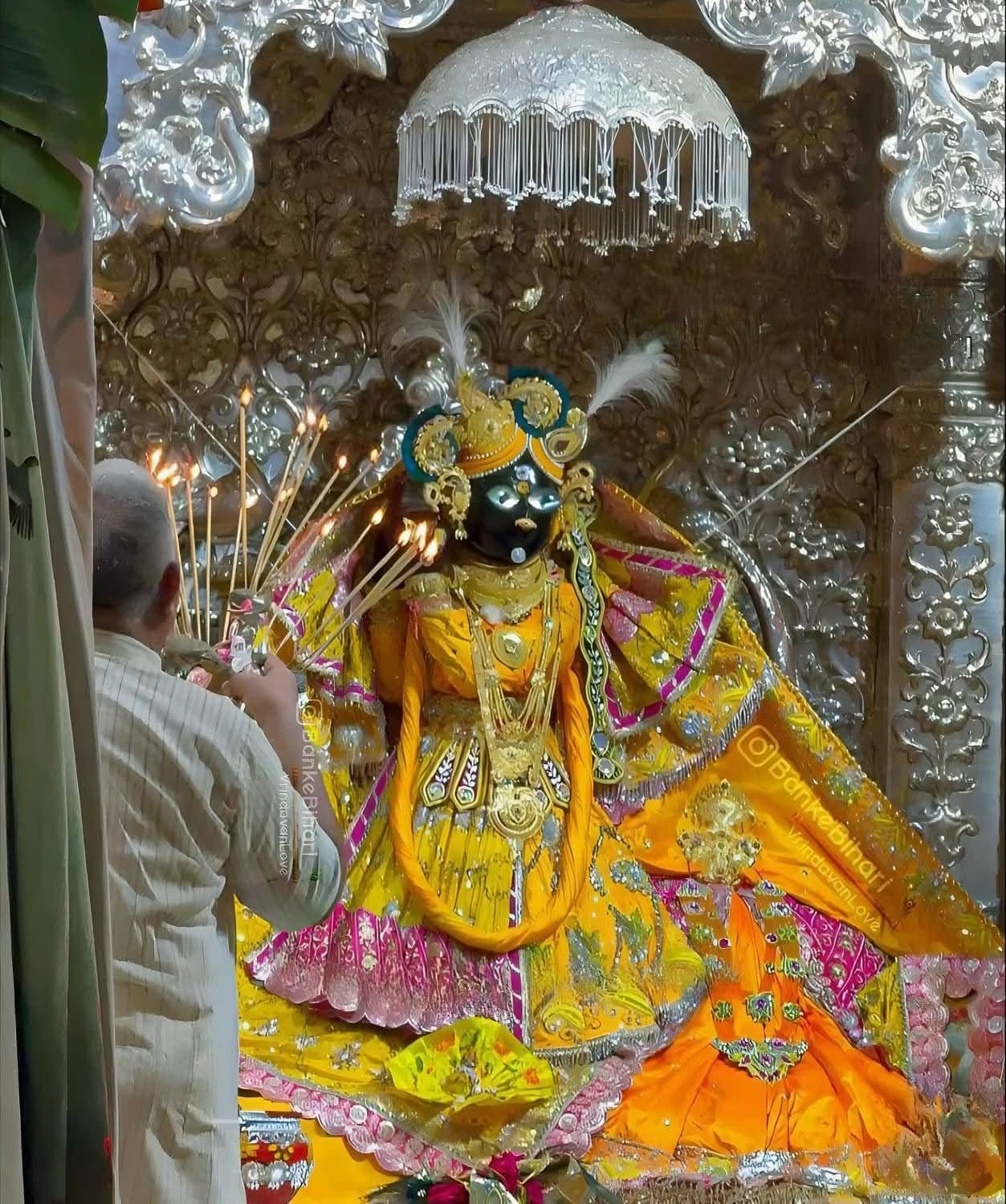
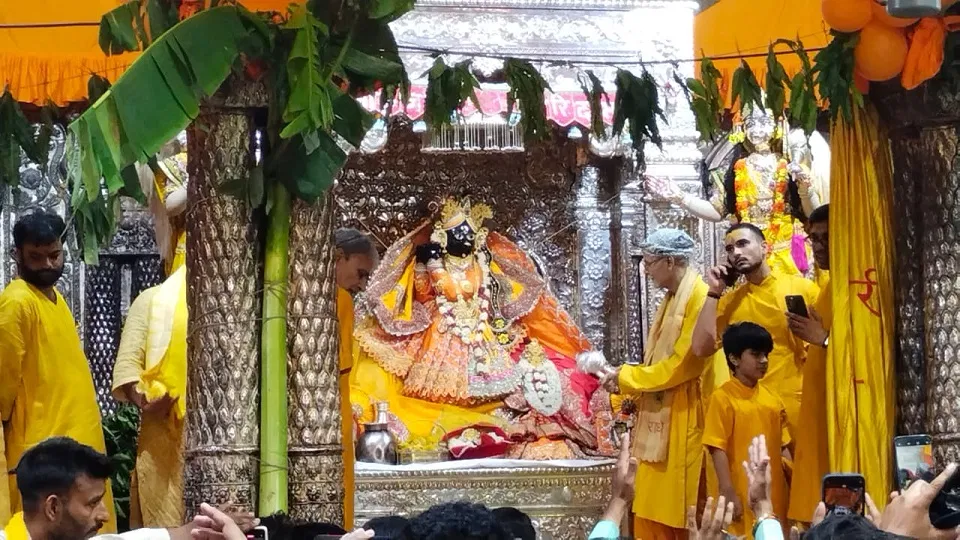
The heart of the temple where priests draw and release a curtain before the deity every few minutes rather than allowing continuous viewing, a practice unique among major Vrindavan temples. The rhythm is said to prevent devotees from becoming overwhelmed by prolonged eye contact with Bihari Ji.
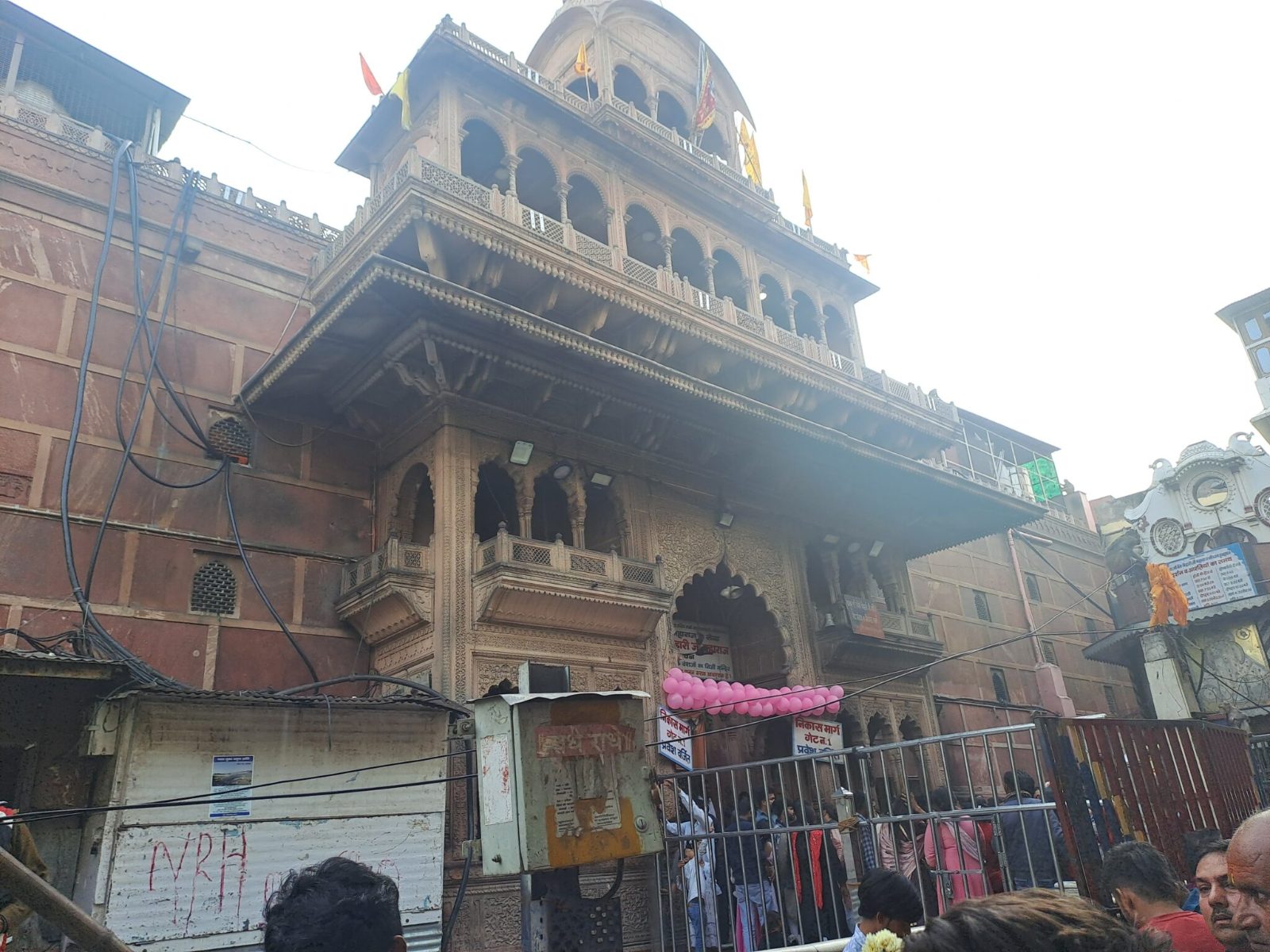
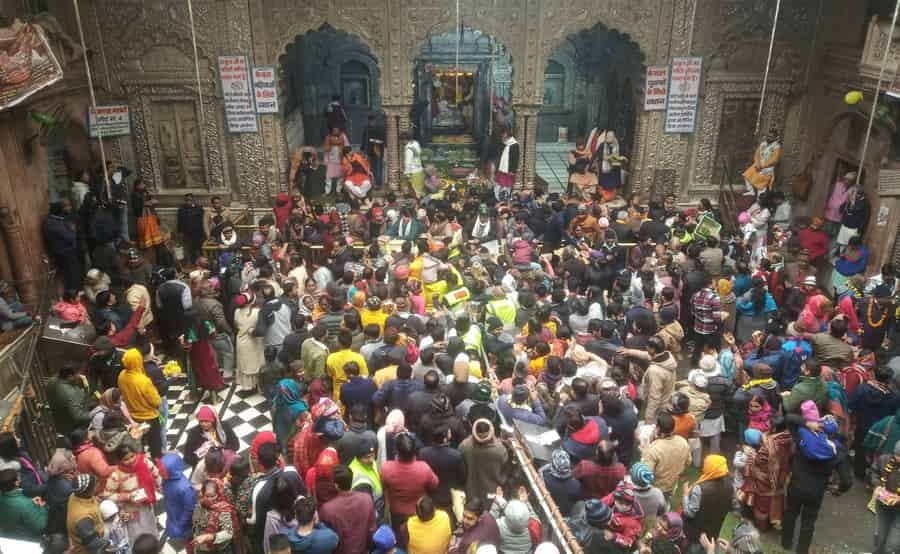
The narrow pedestrian approach through Goda Vihar funnels the day's crowds into a single frisking checkpoint before the courtyard. Its congestion peaks sharply in the final 90 minutes before the noon closure.
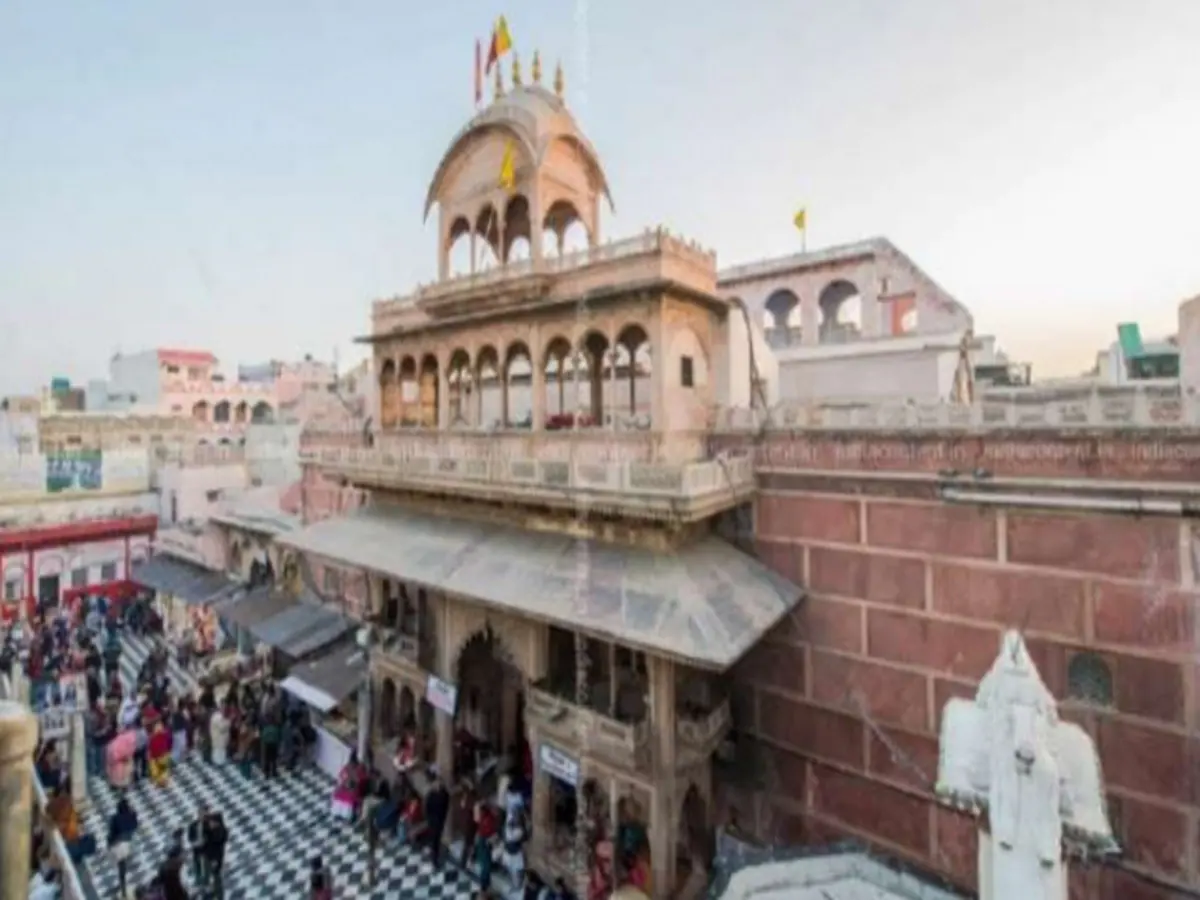
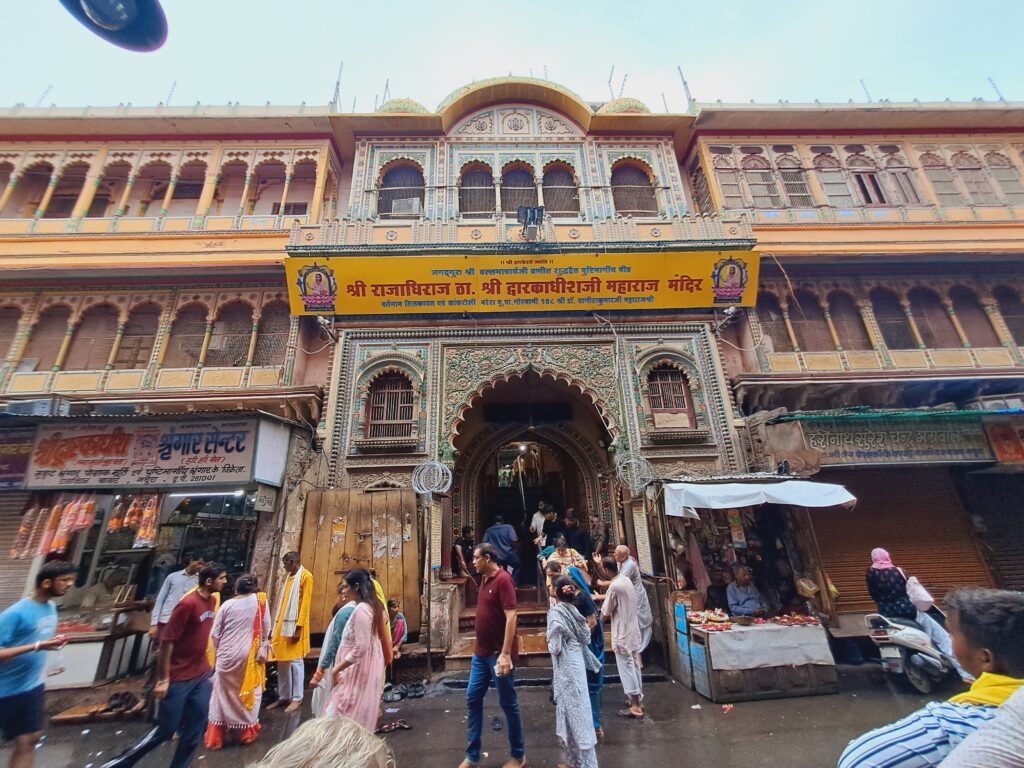
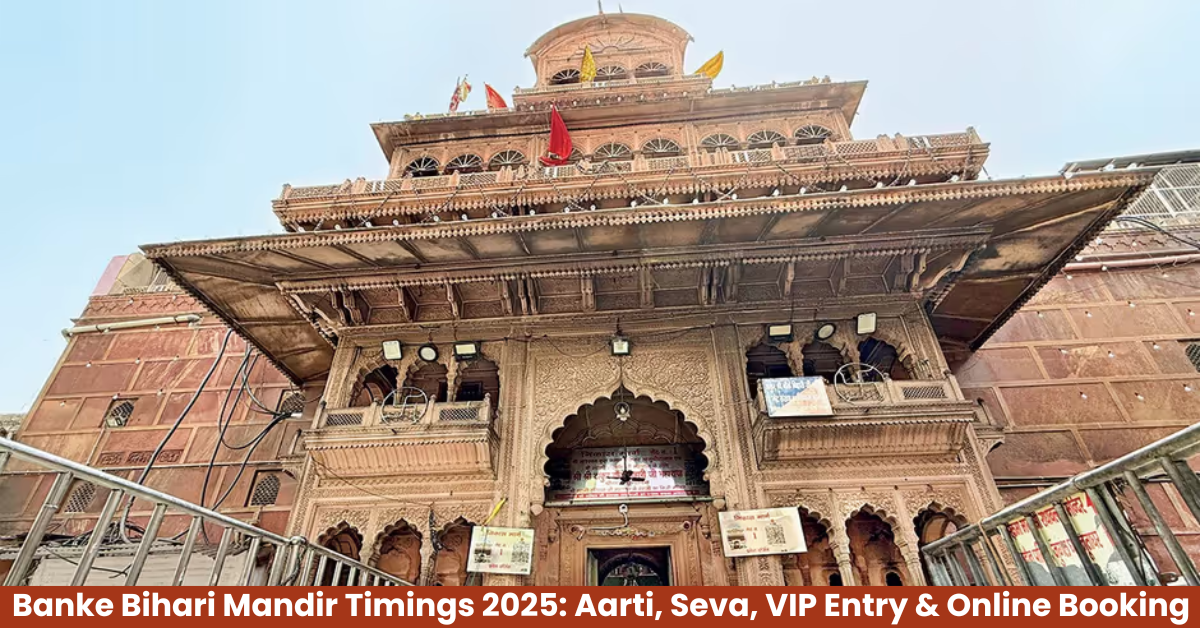
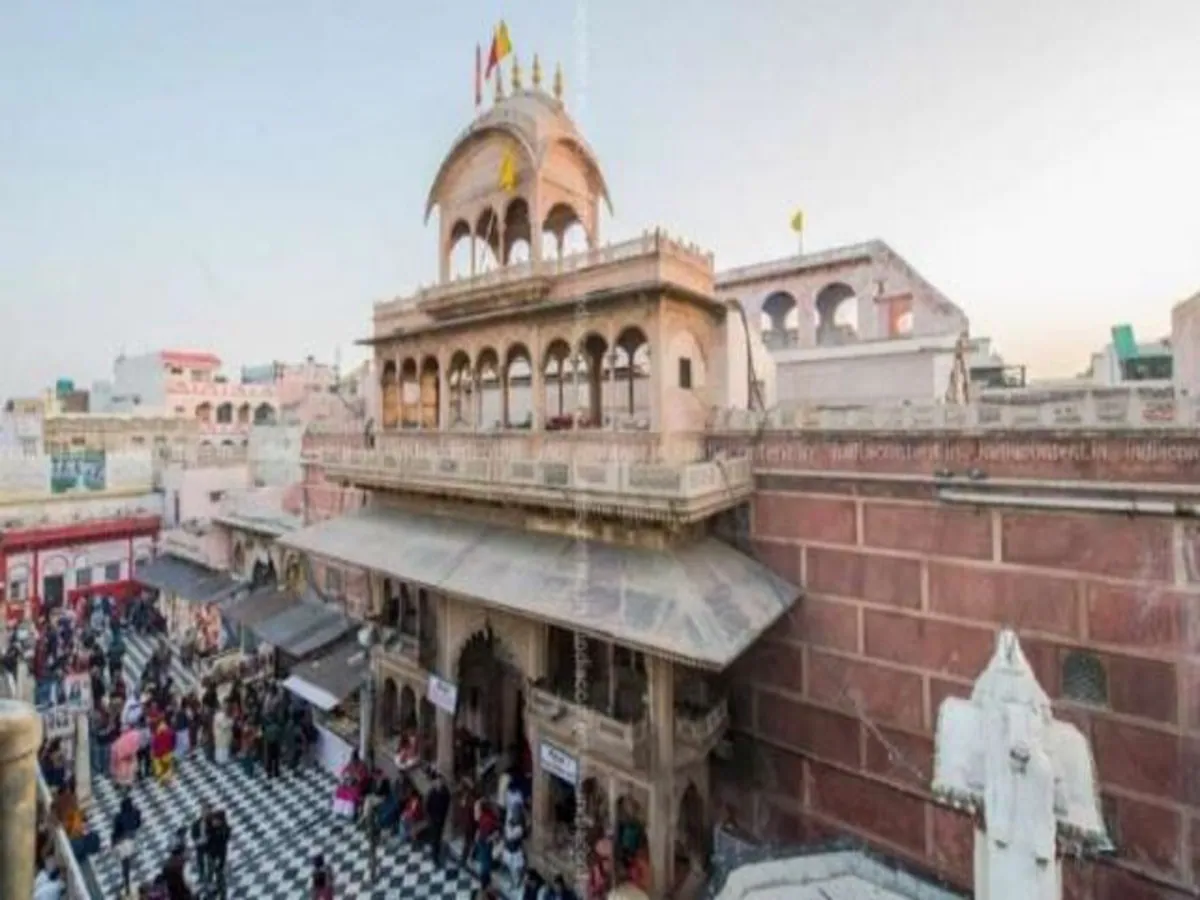
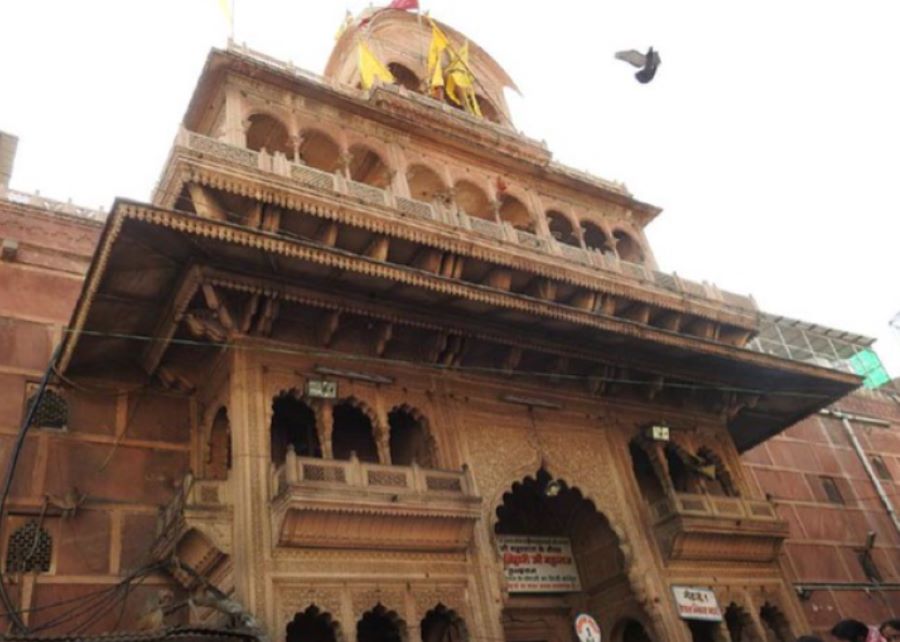
An open gathering space just past the entrance where devotees remove footwear and regroup before and after darshan, framed by the temple's Rajasthani-Mughal architectural blend. Carved archways and painted walls date the structure's core to the 19th century.
Though there is no early Mangala Aarti, the temple observes a Shringar Aarti shortly after morning opening and a Rajbhog Aarti near the noon closure, drawing the day's densest crowd. These two markers structure the entire morning darshan rhythm.
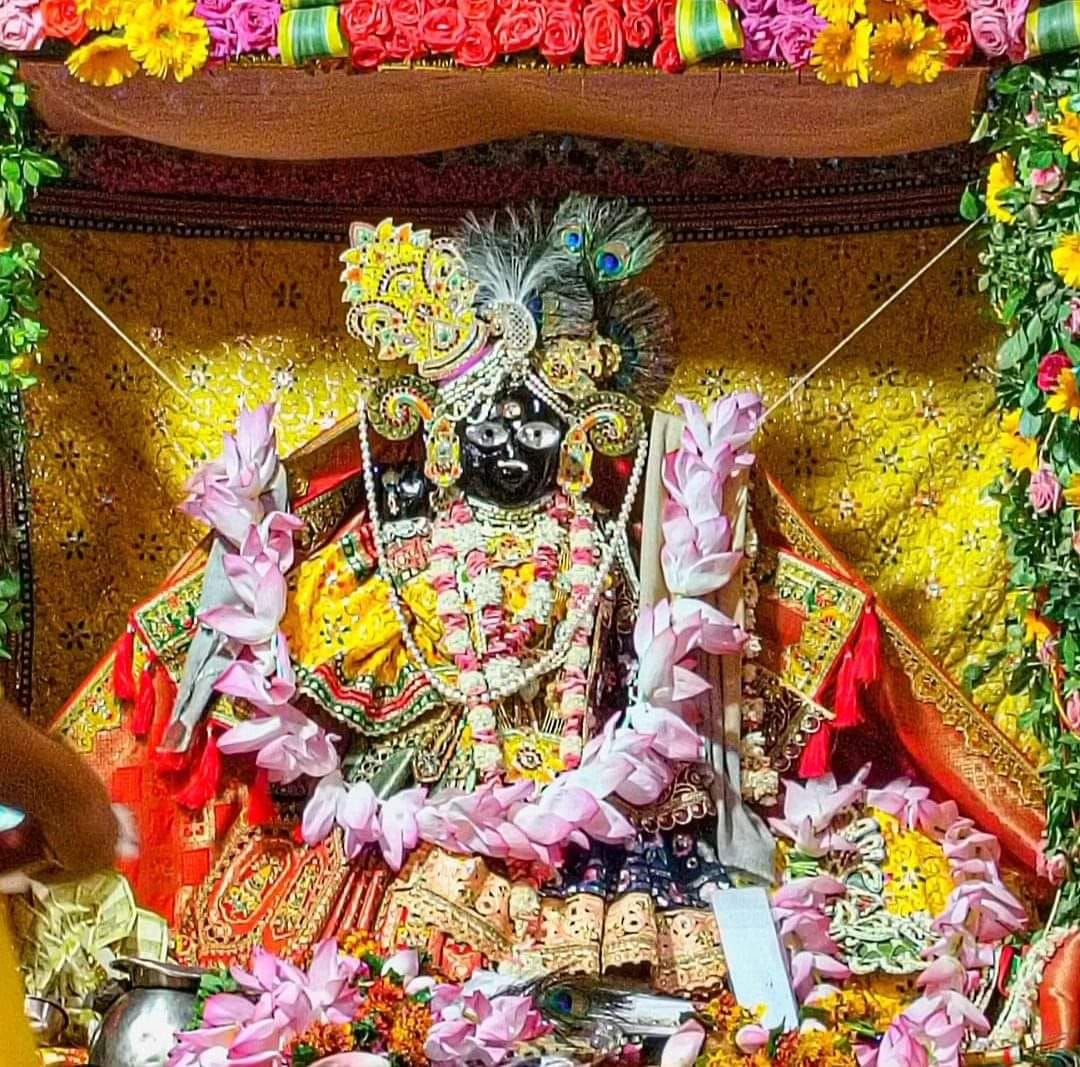
The black stone murti, adorned in changing jewelled attire, is depicted in the Tribhanga (thrice-bent) posture traditionally associated with Krishna's flute-playing stance. The idol's install is attributed to 16th-century saint Swami Haridas.
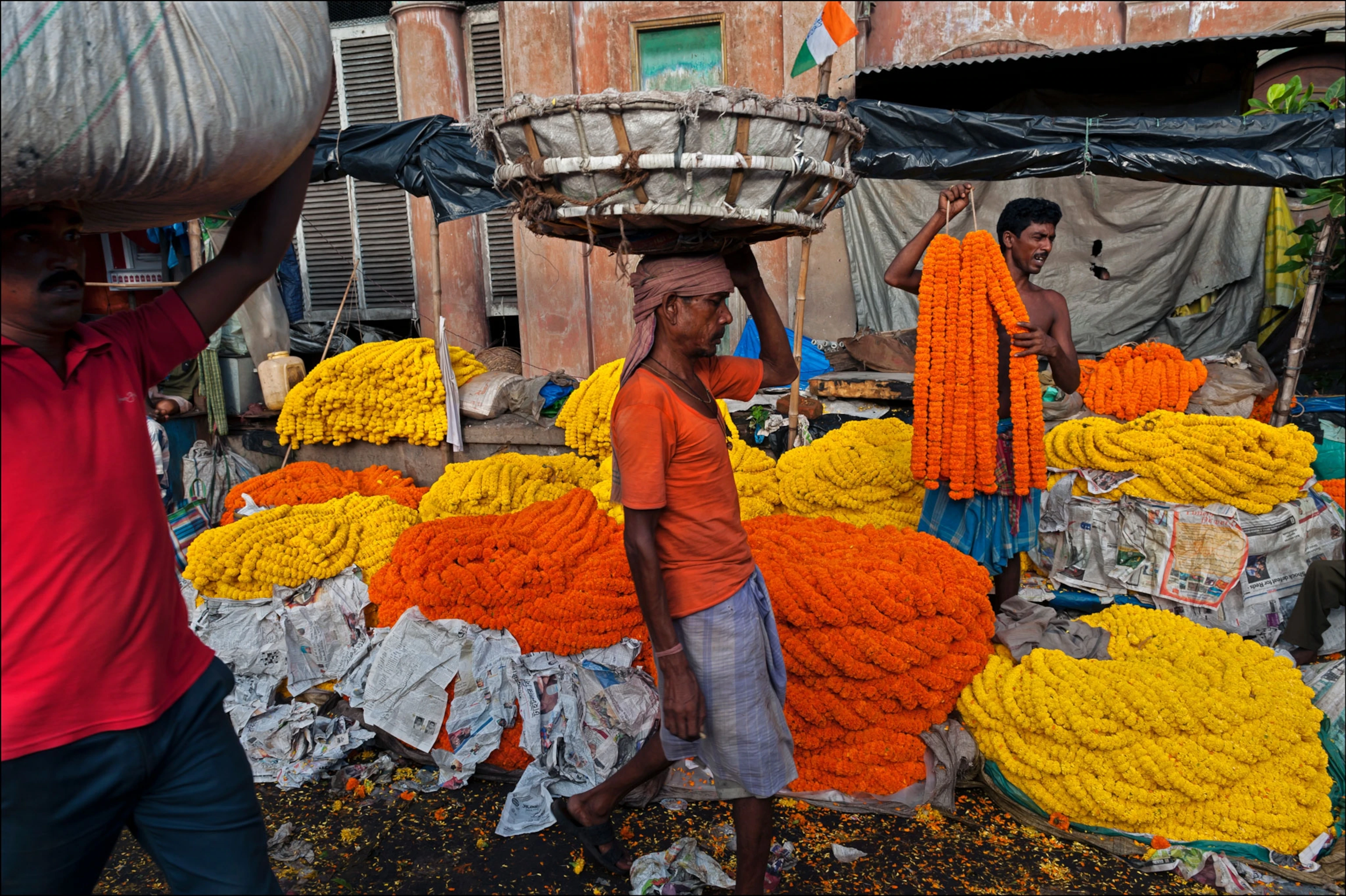
You arrive at Goda Vihar between 07:45 and 09:30, the quietest window before peak crowds build up. Vehicles stop well short — the last few hundred metres are yours on foot, past shuttered sweet stalls and vendors threading marigold into garlands.
You leave your shoes at a stall near the lane entrance. The token costs a few rupees. Barefoot now, you follow the flow of people through a narrowing corridor, the stone underfoot worn smooth and, in July, slick with damp. Entry costs nothing. Free entry, darshan open to all devotees — no counter, no queue for tickets.
Inside, the hall is louder than you expect. You find a position in the standing crowd, perhaps twelve metres from the sanctum. The curtain draws back. You get roughly thirty seconds before it closes again, then reopens. Most visitors stay for six or seven of these cycles. You watch the priests exchange garlands between reveals.
You exit through a side passage into the lane, collect your shoes, and buy peda from the first vendor you pass — this is what everyone does. From here the walk east to Nidhivan takes ten minutes. Many Vrindavan Tours continue that way, or turn toward Radha Raman, and a single Vrindavan Tours tour will often cover three temples before the midday close at 12:00.
By eleven the lanes have thickened considerably. You will be glad you started early.
All the details about your upcoming adventure in one place
Vrindavan Tours guide visitors through the narrow lanes and riverside ghats of a town that holds more than 5,000 shrines devoted to Krishna, from the red sandstone of Govind Dev to the sacred grove of Nidhivan. Guided Vrindavan temple tours pair local commentary with darshan timings, so you reach Banke Bihari and Prem Mandir when the doors are actually open. Booking Vrindavan Tours tickets in advance secures a licensed guide who can navigate the Braj lanes, arrange Yamuna ghat access, and explain the Radha-Krishna traditions behind each mandir.
The presiding deity of Banke Bihari is shown to worshippers behind a curtain that attendants draw closed every few minutes. The interruption is deliberate.
Devotees hold that the gaze of the image is too concentrated to be met continuously, and the rhythm of curtain and reveal has governed the sanctum since the temple's construction in 1864 by descendants of the musician-saint Swami Haridas.
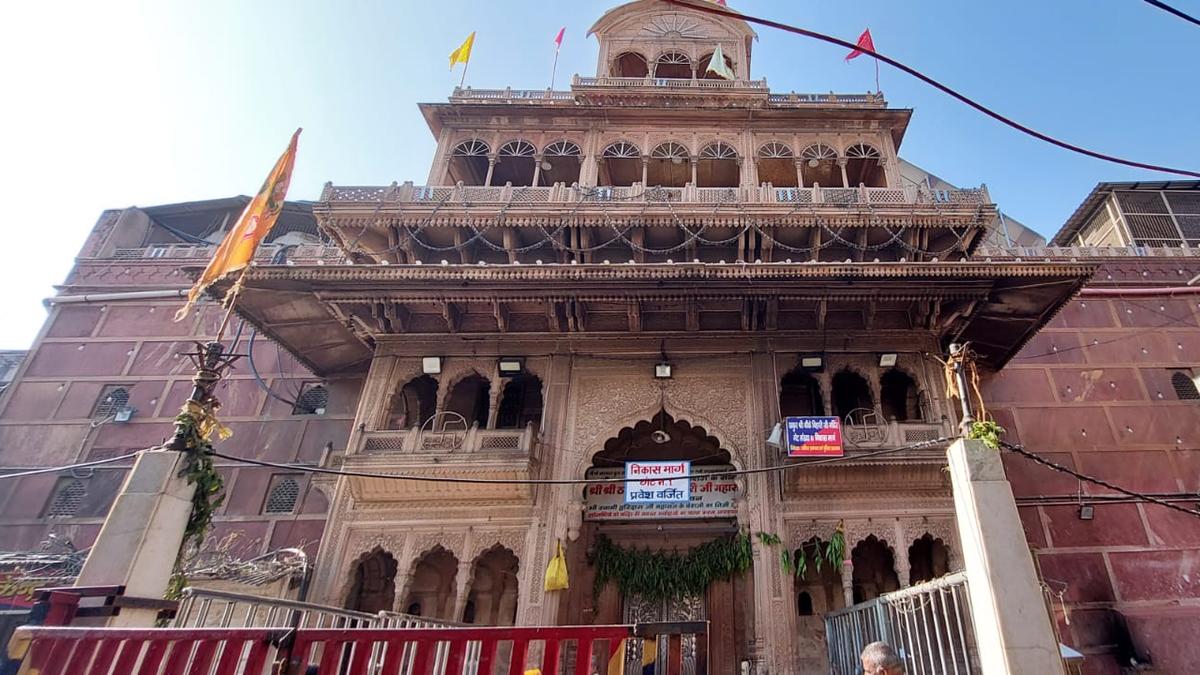
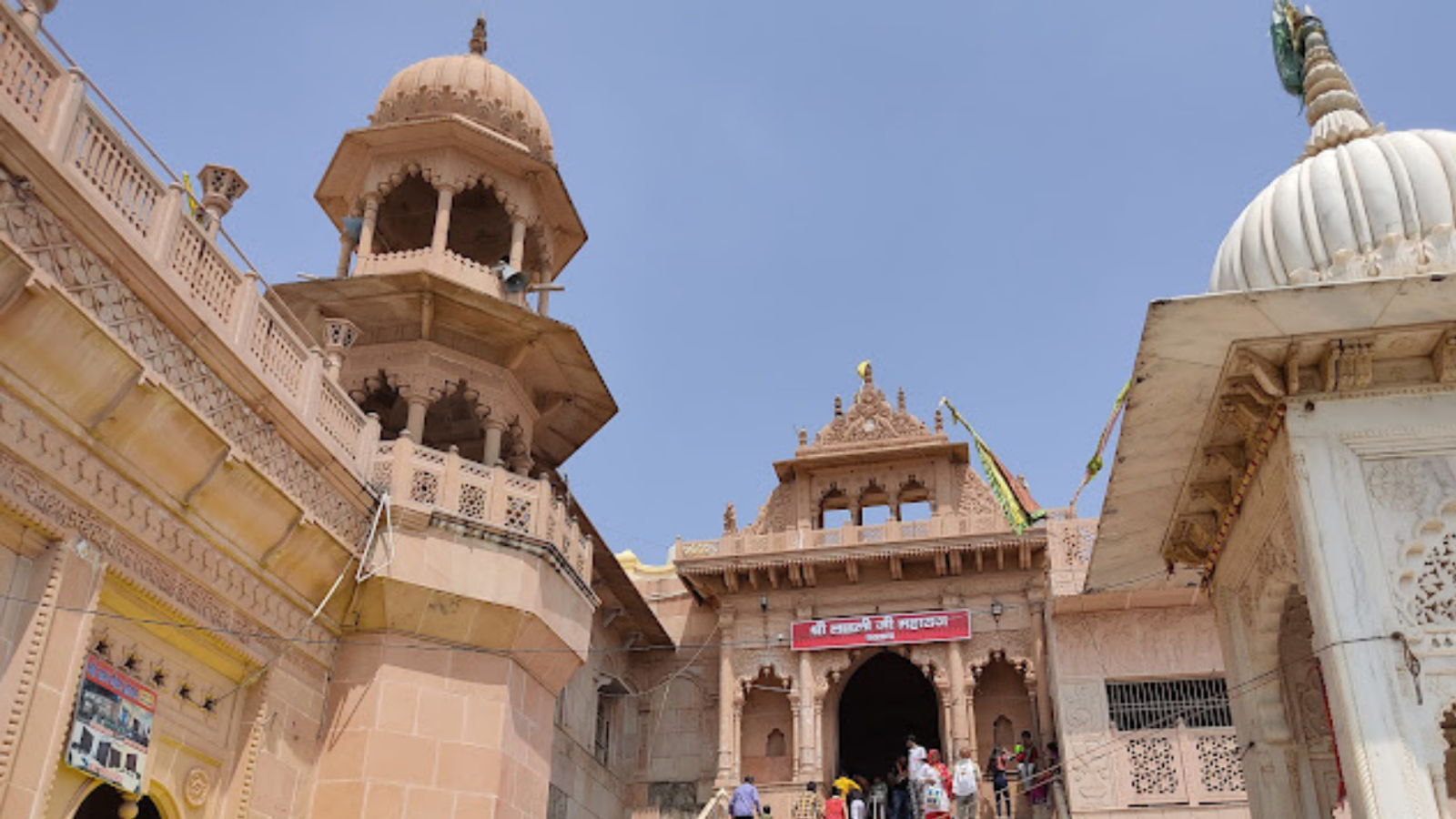
Vrindavan Tours begin, almost without exception, at this address: Banke Bihari Temple, Goda Vihar, Vrindavan, Uttar Pradesh 281121, India. The town holds some five thousand shrines across a few square kilometres, but the lanes of Goda Vihar funnel nearly all foot traffic toward one narrow entrance. The building sits low against the surrounding rooftops. Its Rajasthani-influenced façade carries arched openings, carved jharokha windows, and a restrained sandstone frontage that gives little indication of the density inside.
What distinguishes the site is not scale but proximity. There is no ambulatory corridor, no measured processional route. The sanctum opens directly onto a compact hall, and the distance between a standing visitor and the black stone image is often less than fifteen metres. Bhajan carries from the adjacent bhajan-kutir. Tulsi garlands change hands in the doorway. The Braj dialect spoken in the queue is closer to the language of sixteenth-century devotional poetry than to standard Hindi.
That continuity explains why a Vrindavan temple tour rarely stops at architecture. The town belongs to the Braj cultural region, the landscape mapped by Vaishnava tradition onto specific groves, ghats, and kunds along the Yamuna. Nidhivan lies a short walk east. Seva Kunj, Radha Raman, and the ghats at Keshi and Chir sit within the same warren of lanes, and most structured Vrindavan Tours tours thread several of them into a single circuit rather than treating any one as a standalone destination.
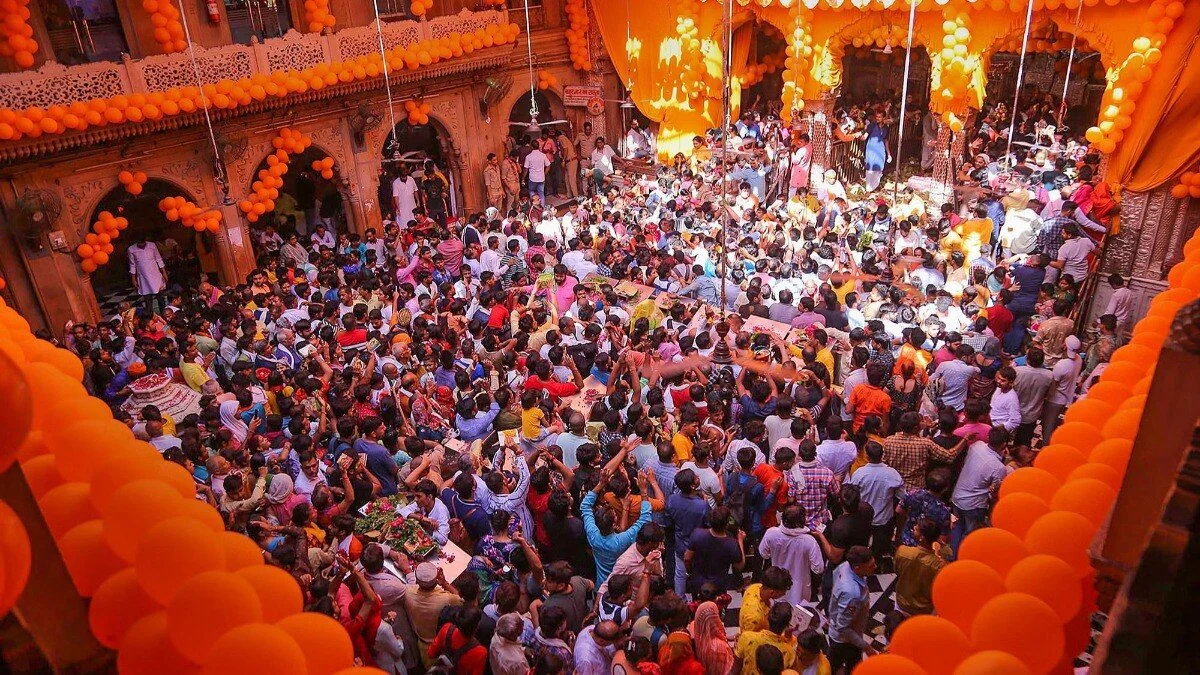
The temple keeps two sessions daily, 07:45–12:00 and 17:30–21:30, every day of the week, with entry free and darshan open to all devotees. The rhythm shapes the town around it. Shops shutter at midday. Lanes empty. By late afternoon the crowd rebuilds, and by the evening session the approach roads are impassable to vehicles.
Summer visitors in July encounter the monsoon variant of this: humidity in the covered hall, wet marble, and the Yamuna running high. Pilgrimage traffic across the Braj landmarks does not thin. It simply moves earlier, which is why nearly every itinerary sold as Vrindavan Tours now anchors itself to the first hour after opening.

The curtain closes not to conceal the deity, but because the gaze is held to be too concentrated to meet without pause.
Modest, temple-appropriate clothing is expected at Banke Bihari Temple: shoulders and knees covered for both men and women, with shorts, sleeveless tops, and swimwear-style clothing discouraged. Footwear must be removed before entering the sanctum area and left at the designated shoe-stand near the entrance lane. Many operators running Vrindavan Tours advise carrying a light shawl or dupatta, since the narrow approach lanes get crowded and a covering helps in the press of devotees.
Security checks and frisking are routine at the entrance lane given the daily volume of pilgrims, and large backpacks or suitcases are not practical inside the narrow approach corridor. A small drawstring pouch or clutch for phone, wallet, and shoes-token is the practical choice on any Vrindavan Tours itinerary. Metal detectors and police personnel are stationed at the main gate during peak morning and evening sessions.
Photography and videography of the deity are not permitted inside the sanctum where the curtain (jhanki) darshan takes place, and phones should be put away as you approach the inner gate. Casual photos of the temple courtyard, gates, and surrounding lanes are generally tolerated outside the sanctum. Guides on Vrindavan Tours typically remind visitors to silence phones and pocket cameras before the final approach to Bihari Ji.
Children should be kept within arm's reach in the entrance lane, since the crush near the Rajbhog Aarti period before noon closure can be intense. Strollers are impractical in the narrow gullies leading to the temple.
The temple sits at ground level but is reached through narrow, uneven lanes with steps and dense crowds, which makes wheelchair access difficult without assistance. Elderly visitors and those with mobility limitations should budget extra time and consider arriving during the quieter 07:45–09:30 window. There is no dedicated accessible entrance or elevator on site.
No food or drink may be carried into the temple precinct itself, and eating is not permitted inside the darshan lane or courtyard. Small bottles of drinking water are generally allowed as far as the shoe-stand but not into the inner sanctum area. Prasad distributed by the temple or licensed vendors nearby is the only food item exchanged at the site itself.
Weekday, calmer than weekends
Mid-week, moderate footfall
Crowds build toward weekend
Heavier footfall, arrive early
Busiest day, long queues likely
Darshan hours
07:45–12:00 and 17:30–21:30 daily
Address
Banke Bihari Temple, Goda Vihar, Vrindavan, Uttar Pradesh 281121, India
Step-free access
Ground-level entry, narrow lanes, no ramps inside sanctum
Best arrival window
07:45–09:30, quietest darshan before peak crowds
Bag storage
No cloakroom on site, carry only a small pouch
Public transport · 25-45 min from Mathura Junction · ₹10-30 per person for shared transport
Take a train to Mathura Junction, then a shared auto, e-rickshaw, or bus onward to Vrindavan's temple lanes.
Taxi · 20-30 min from Mathura, 2-3 hrs from Delhi · ₹300-800 depending on distance
Book a taxi directly from Mathura Junction or Agra/Delhi airports along NH 44 or the Yamuna Expressway into Vrindavan.
Car · 2.5-3 hrs from Delhi, 1.5 hrs from Agra · Parking approx ₹20-50
Self-drive via NH 44 from Delhi or Agra, with parking available in designated lots outside the pedestrian-only temple lanes.
Walk · 15-30 min from Prem Mandir or ISKCON · Free
From nearby landmarks like Prem Mandir or ISKCON Temple, the final stretch into the temple lane is walkable.
There is no ticketed entry or booking to cancel, since darshan is free for all devotees with 0 INR entrance fee. Any cancellation policy that applies is only for third-party Vrindavan Tours packages (transport, guide, hotel) booked separately, and those follow the individual operator's own refund window.
Recommended time
1-2 hours
A quick darshan, catching the curtain open and close a few times near the sanctum, takes about 30-45 minutes on a calm weekday morning. Add time around Rajbhog, the late-morning offering just before the midday closure, when the queue from the lane entrance can stretch to 45-75 minutes and the crowd packs in tightly. Most travelers arranging Vrindavan Tours build in a buffer of an extra 30 minutes for the entry lane alone, since the morning window (07:45-12:00) and evening window (17:30-21:30) each build to their own peak rather than staying level. Treat 1-2 hours as the realistic budget once queueing near Aarti time is factored in, not just the few minutes spent at the curtain itself.
Crowd levels through the day
Weather · crowds · average price — dots go green to amber to red as each metric rises.
Cool mornings around 8-15°C make the 08:45 opening comfortable, and Janmashtami-season afterglow events sometimes extend into early winter.
Daytime heat can reach 38-40°C in Vrindavan through May and June, so the 07:45 morning session is far more comfortable than the evening slot.
Humid conditions with intermittent heavy rain make lanes slippery; late July into August also brings Janmashtami crowds building toward the festival peak.
Janmashtami draws the year's largest crowds to Vrindavan, and darshan queues extend well beyond normal hours around the festival date.
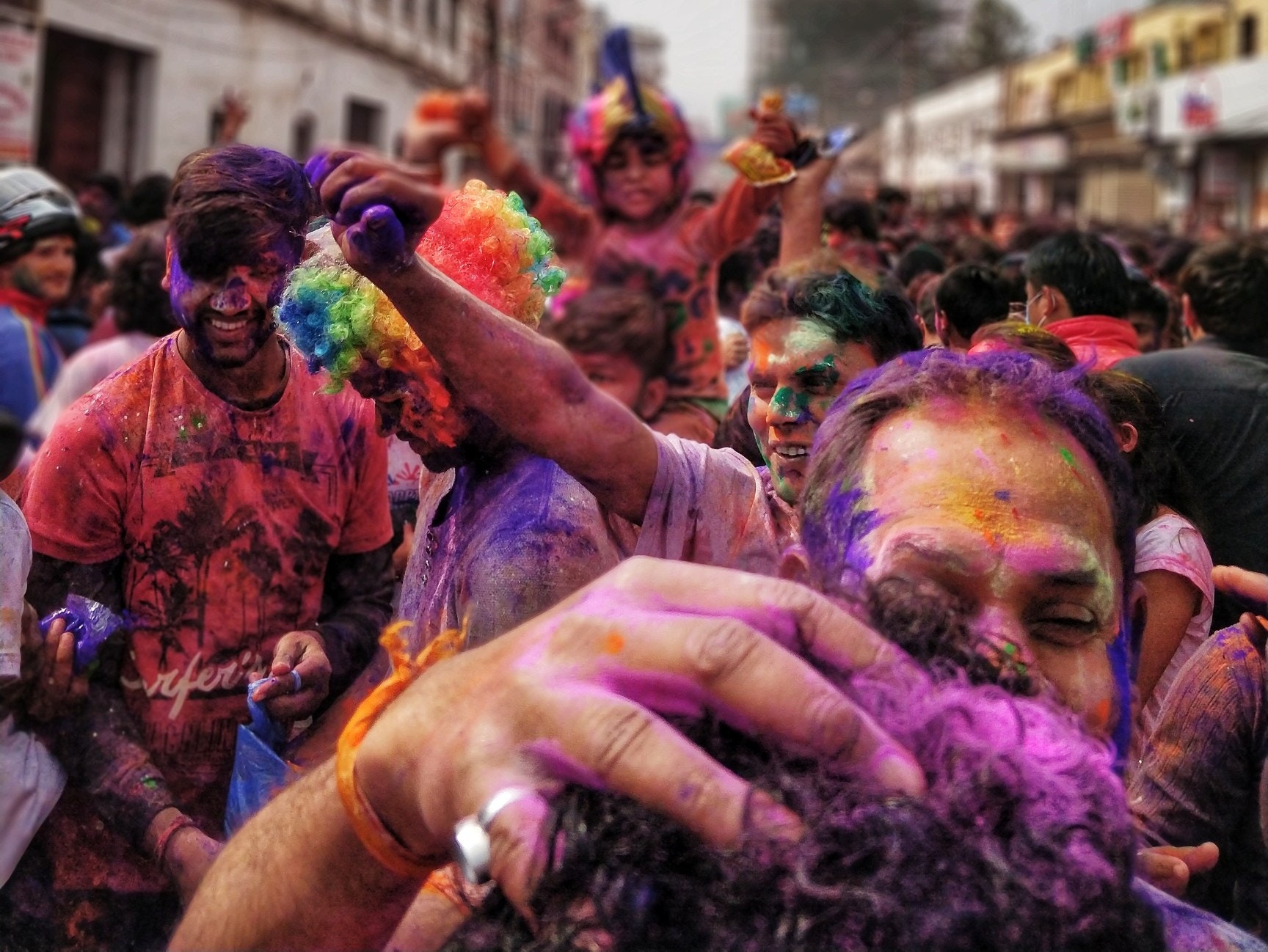
Holi season brings colorful, high-energy crowds and temporarily altered darshan patterns around the festival.
The temple closes for roughly 5-6 hours between the morning and evening sessions, so plan lunch and other Vrindavan Tours stops for that window rather than waiting at the gate.
Shoes come off before the final approach lane, so slip-on sandals save time versus laces at the crowded shoe-stand.
Cash in small denominations helps for shoe-stand donations, prasad stalls, and short auto-rickshaw hops between temples.
The final ceremony before the noon closure draws the day's biggest crowd crush, so anyone wanting a calmer experience should aim for the first hour after opening instead.
Frisking and no-photography rules apply near the sanctum, so silence and stow devices before joining the queue to avoid delays.
Nidhivan, Seva Kunj, and Radha Vallabh Temple are all within a short walk, making it easy to string together a walking route without arranging separate transport.
Timings shift on Ekadashi and major festivals like Janmashtami and Holi, so confirm the day's schedule before setting out.
Banke Bihari Temple, Goda Vihar, Vrindavan, Uttar Pradesh 281121
Primary pickup and gathering point for group Vrindavan Tours
Get directionsJust inside the entrance lane, Goda Vihar
Common spot to regroup after darshan
Get directionsThe story begins in the sixteenth century, in a grove called Nidhivan. Swami Haridas, born around 1480, settled there as an ascetic musician of the Braj country. He was a singer of dhrupad, and tradition names Tansen among those who sought him out. His disciples record that Haridas sang a composition invoking the divine couple. From the ground, they say, a single dark image emerged — Krishna and Radha fused into one form. Devotees named it Banke Bihari, the enjoyer who bends in three places. The deity was first housed at Nidhivan itself, where the Haridasi lineage kept it for generations. For roughly three centuries the image remained in that modest setting. The present sanctuary dates to 1862, when Goswami descendants of Haridas funded a purpose-built temple at Goda Vihar and moved the deity there. The architecture is Rajasthani in temper: arched windows, projecting balconies, a facade of pale stone worked with floral relief rather than figural carving. Visitors on Vrindavan Tours still enter through that nineteenth-century doorway. The building was designed for crowds, though nothing in 1862 anticipated the scale that would follow. One peculiarity survives from the earliest period and shapes every darshan. A curtain is drawn across the sanctum every few minutes, then reopened. The Haridasi tradition holds that the gaze of Banke Bihari is too intense to be met continuously — that unbroken sight has drawn devotees away from their homes. No bell rings in the temple and no conch is blown, a silence maintained since Haridas himself. These customs, more than any Vrindavan temple tour itinerary, define the encounter. Banke Bihari remains the devotional centre of the Haridasi Sampradaya, administered by hereditary Goswami families who trace descent from the saint's brother. The Uttar Pradesh government has repeatedly weighed corridor redevelopment around the temple, and litigation over management has run for decades. Guided Vrindavan Tours tours now thread the lane daily; independent Vrindavan Tours tickets are unnecessary, since the sanctum belongs to all. A Vrindavan Tours tour of the Braj landmarks that omits this doorway omits its origin.
Swami Haridas, founding figure of the Haridasi Sampradaya, is born in the Braj region.
Tradition holds that the image of Banke Bihari manifests at Nidhivan in response to Haridas's singing.
The deity remains at Nidhivan under the care of Haridas's Goswami descendants.
Goswami families fund and complete the present Rajasthani-style temple at Goda Vihar.
The curtain ritual and the temple's prohibition on bells and conches are formalised as daily practice.
Litigation over hereditary management rights between Goswami branches reaches the Indian courts.
State authorities debate a corridor redevelopment scheme for the congested lanes around the sanctum.
The temple continues free darshan for all devotees under Goswami administration.
Vrindavan Tours to Banke Bihari Temple can be joyful with children, but the approach through the narrow Kunj Gali gets tightly packed, so a little planning goes a long way. Families who pace themselves and stick to quieter windows tend to have the smoothest darshan experience.
Skip the wheeled stroller entirely: the Gali is cobbled, choked with foot traffic, and battery-rickshaws weave through, so carry younger children in a sling or on your hip instead.
School-age kids who can walk and follow instructions manage best; toddlers and infants do fine if carried close, since the crush near the sanctum can be sudden and disorienting.
Public toilets and basic amenities exist near the temple approach but are limited and not stroller-friendly, so use facilities before leaving your hotel or lodging.
Arrive in the 07:45–09:30 window for a calmer Vrindavan temple tour, get darshan done, then step back into a side lane to regroup before re-entering the flow rather than lingering near the entrance doors.
If the Gali feels too dense or monsoon showers hit, pair this stop with a calmer nearby temple visit and return to Banke Bihari later in the evening opening hours when the crowd may have thinned.
There is no dining inside Banke Bihari Temple itself, so most visitors eat in the surrounding lanes before or after darshan, and anyone planning Vrindavan Tours around this temple should budget a short walk or ride for food. Banke Bihari Gali is packed with sweet shops and chaat stalls, while a heartier vegetarian thali or sattvic buffet waits a few minutes away at ISKCON.
Steps from the exit, this shop sells peda, ladoo and mishri for prasad or gifting; mornings right after darshan get crowded, so it suits a quick grab-and-go rather than sit-down eating.
One of the oldest mithai names in the Mathura-Vrindavan belt, known for soft khoya peda, malai barfi and rabdi; good for stocking up before a longer Vrindavan Tours itinerary since portions travel well.
Famous for a loaded desi-ghee chilla stuffed with paneer, aloo and dry fruits; expect a short queue at peak evening hours and carry cash, since card payments are rare here.
Inside the Krishna Balaram guesthouse, this sattvic restaurant serves thalis, dal, kofta and desserts without onion or garlic; a calmer, seated option for a full meal after visiting Banke Bihari, especially for families wanting to sit down properly.
Real experiences from real travelers
We started our Vrindavan Tours booking at 5:40 am and the lanes were still cool and half-empty, which made all the difference. Our guide explained the Braj Bhoomi legends as we walked from one temple courtyard to the next, and the marigold sellers were just setting up. By nine the sun was hard overhead and we were already sitting with cold lassi.
Without a local guide I would have been lost in the Nidhivan grove and the surrounding alleys, so the Vrindavan Tours tour was worth every rupee. He knew which courtyards were open and which had long queues, and he spoke to the pujaris in Braj bhasha. The langur monkeys stole a woman's sunglasses about two minutes in, which was a nice warning.
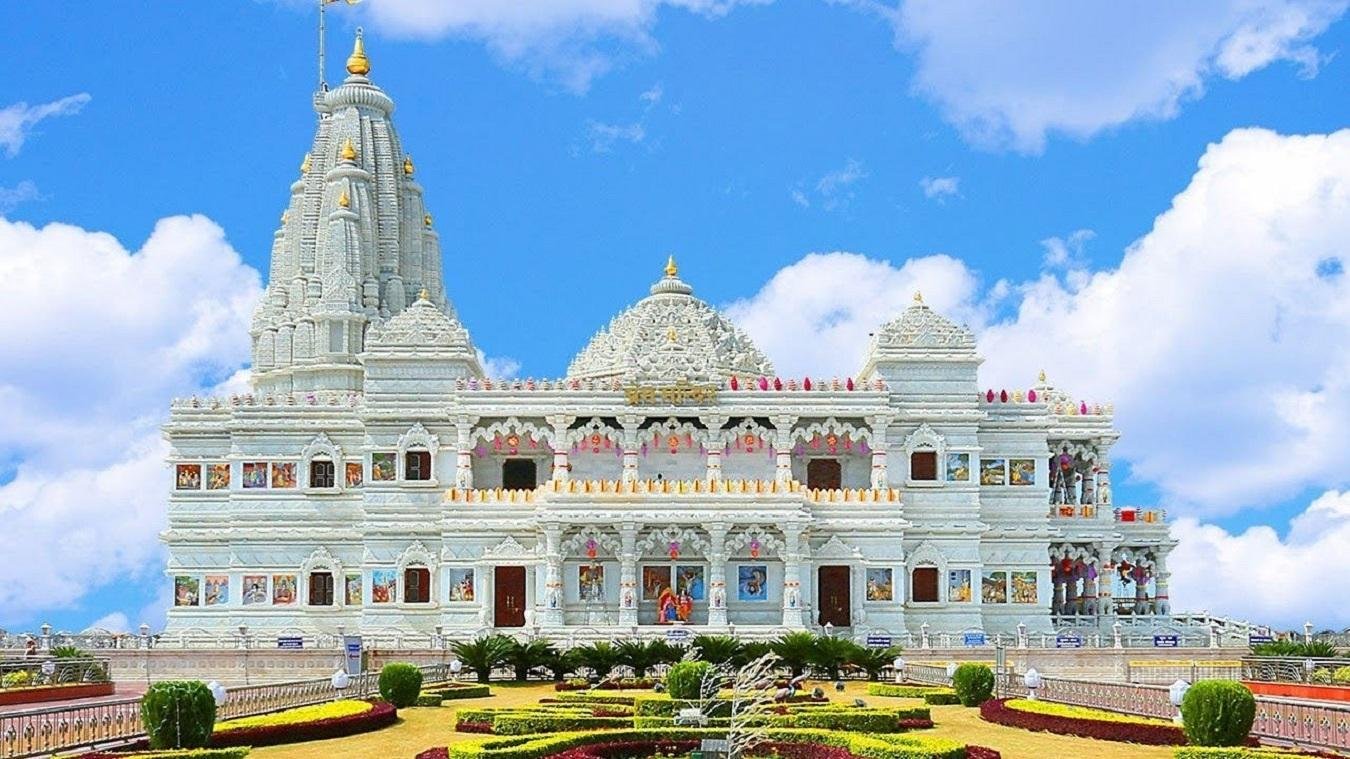
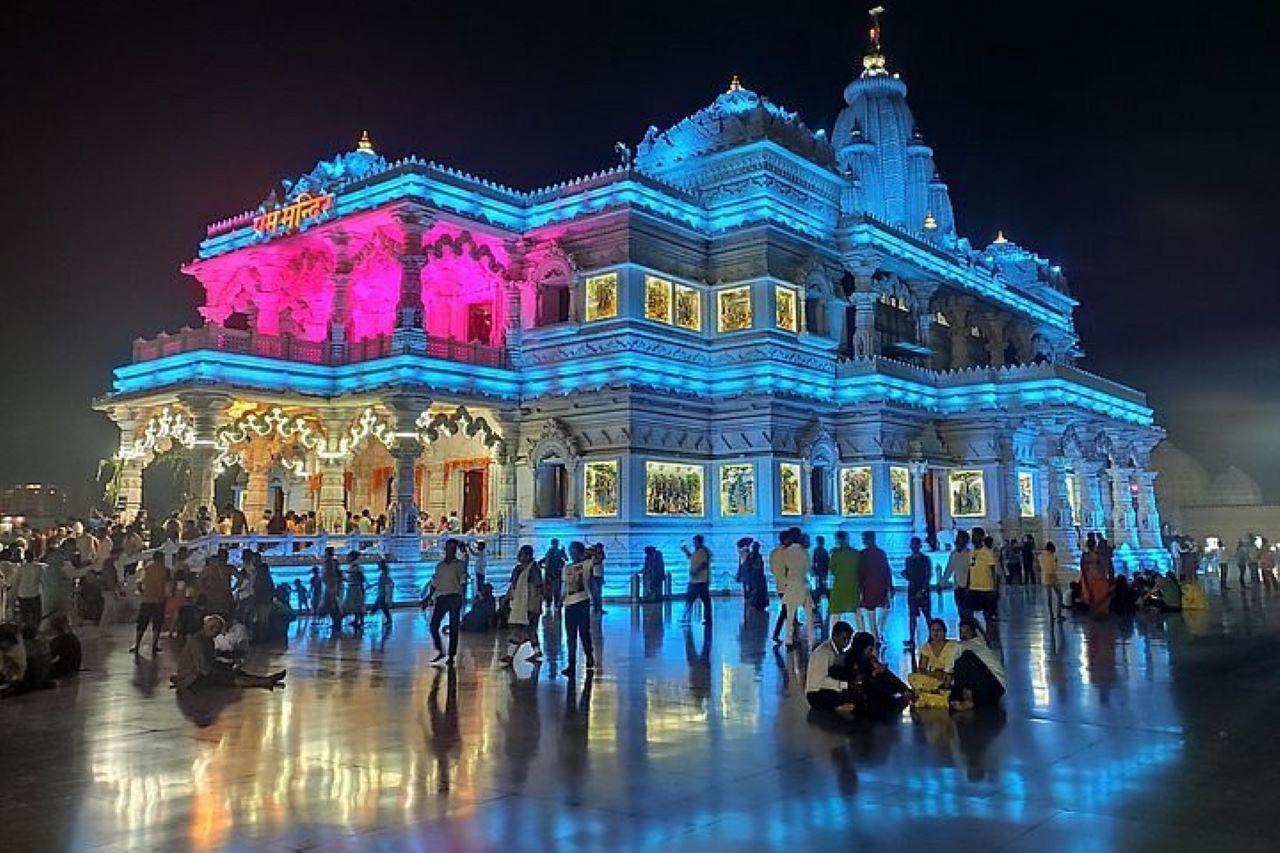
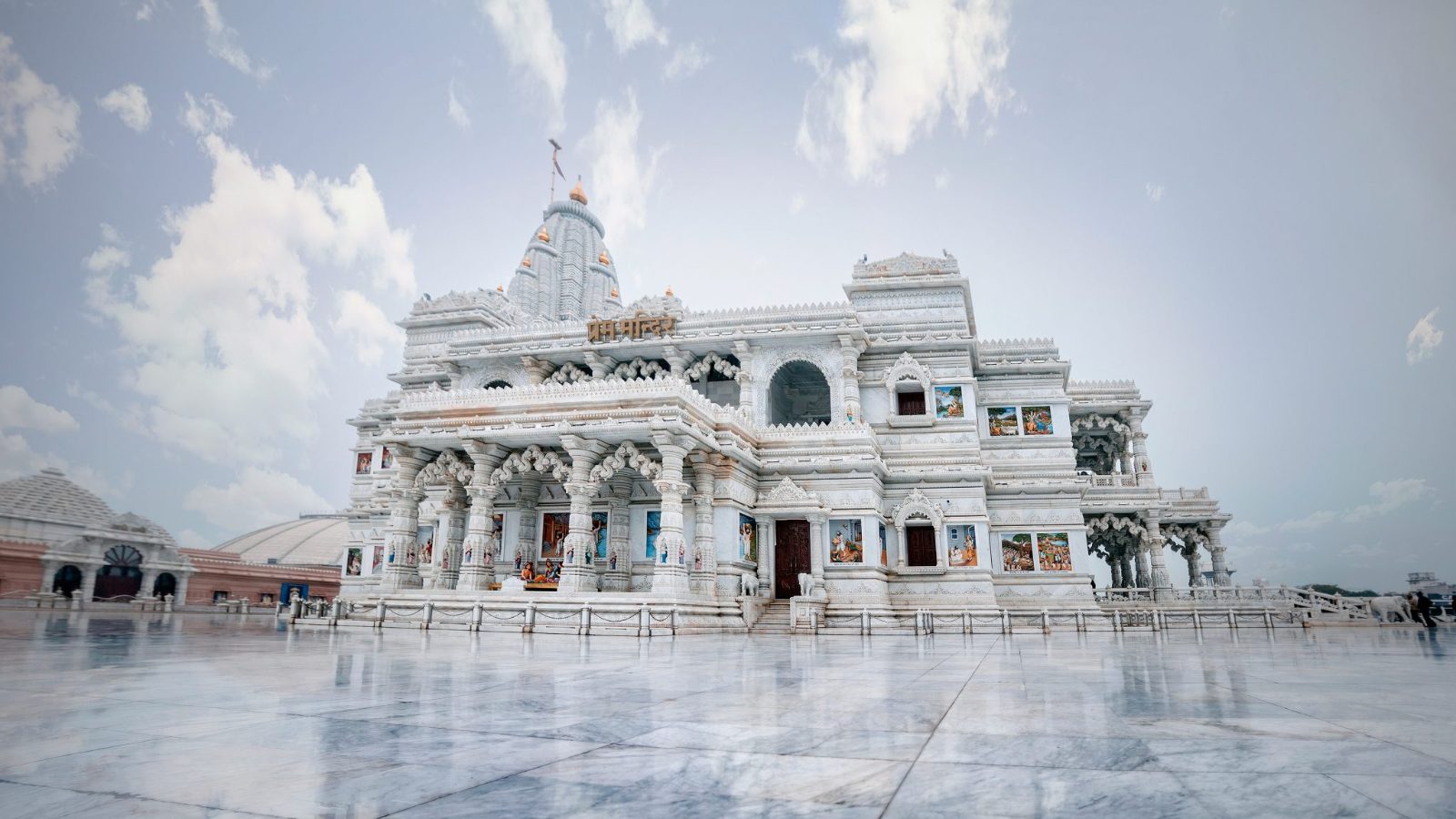
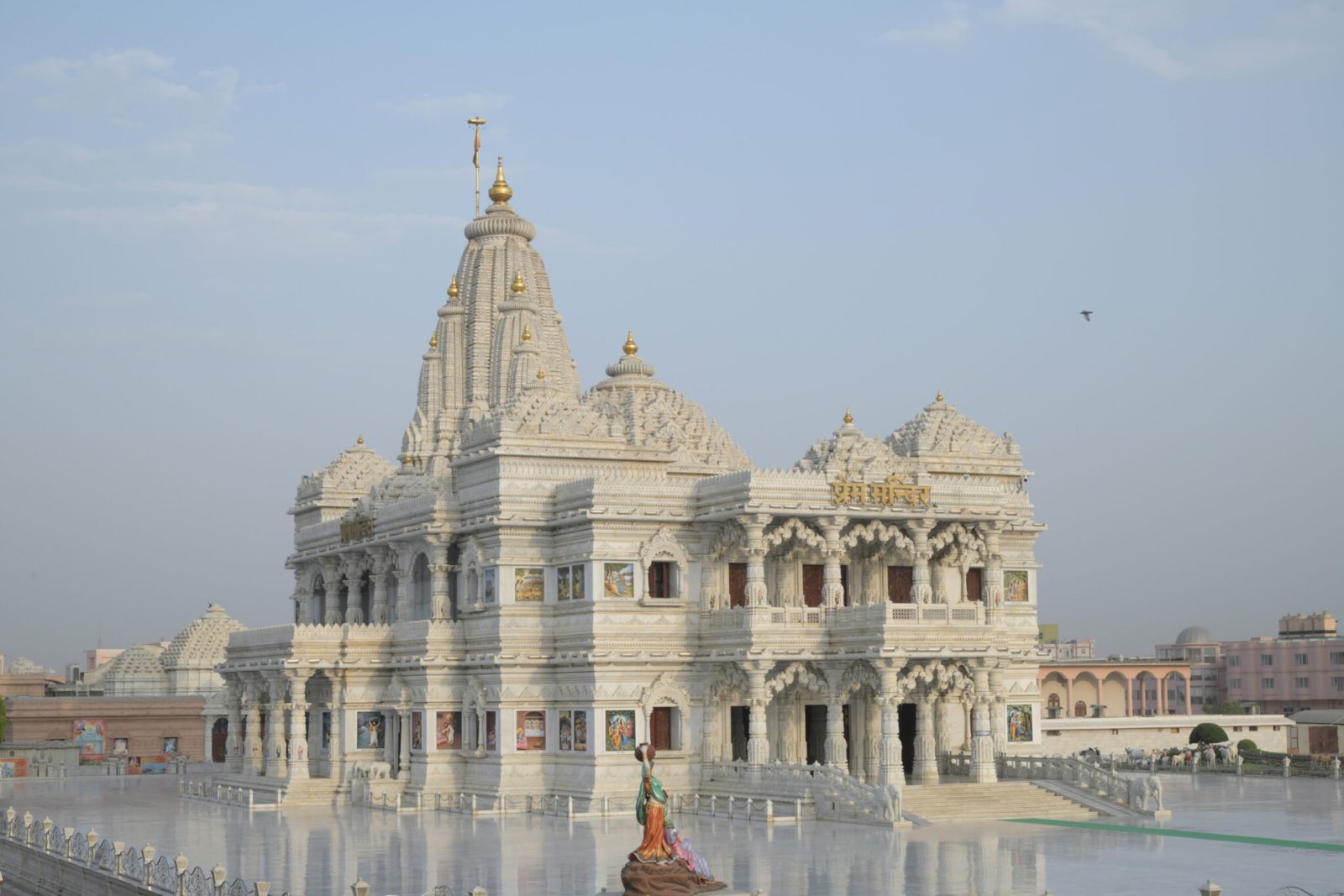
Prem Mandir at dusk with the white marble turning pink is the image I brought home. The relief carvings are far more detailed than photographs suggest, and standing close you can see individual folds of cloth cut into the stone. Our small group booked Vrindavan Tours tickets in advance and skipped a long entry line at the second temple.
Weekend afternoon was very crowded and the temple lanes get narrow enough that you move at the pace of the crowd. Still, the sound of bells and kirtan carries down every street and the atmosphere is unlike anywhere else I have travelled in India. Wear shoes you can slip off quickly.
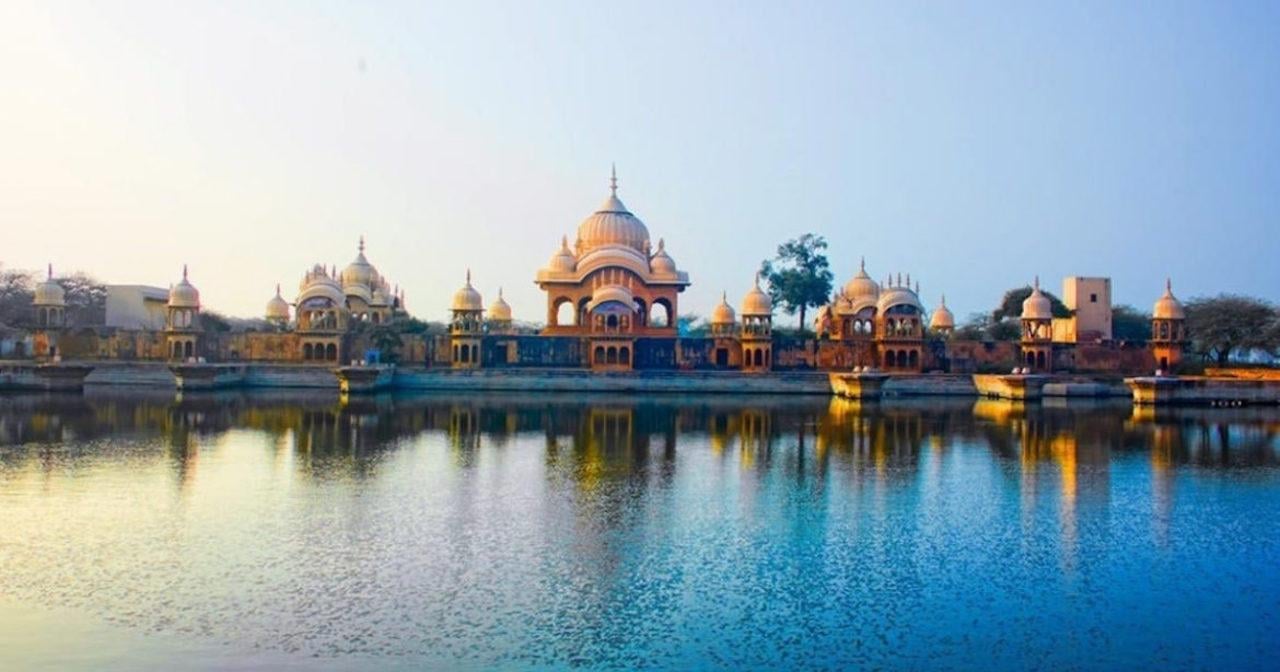
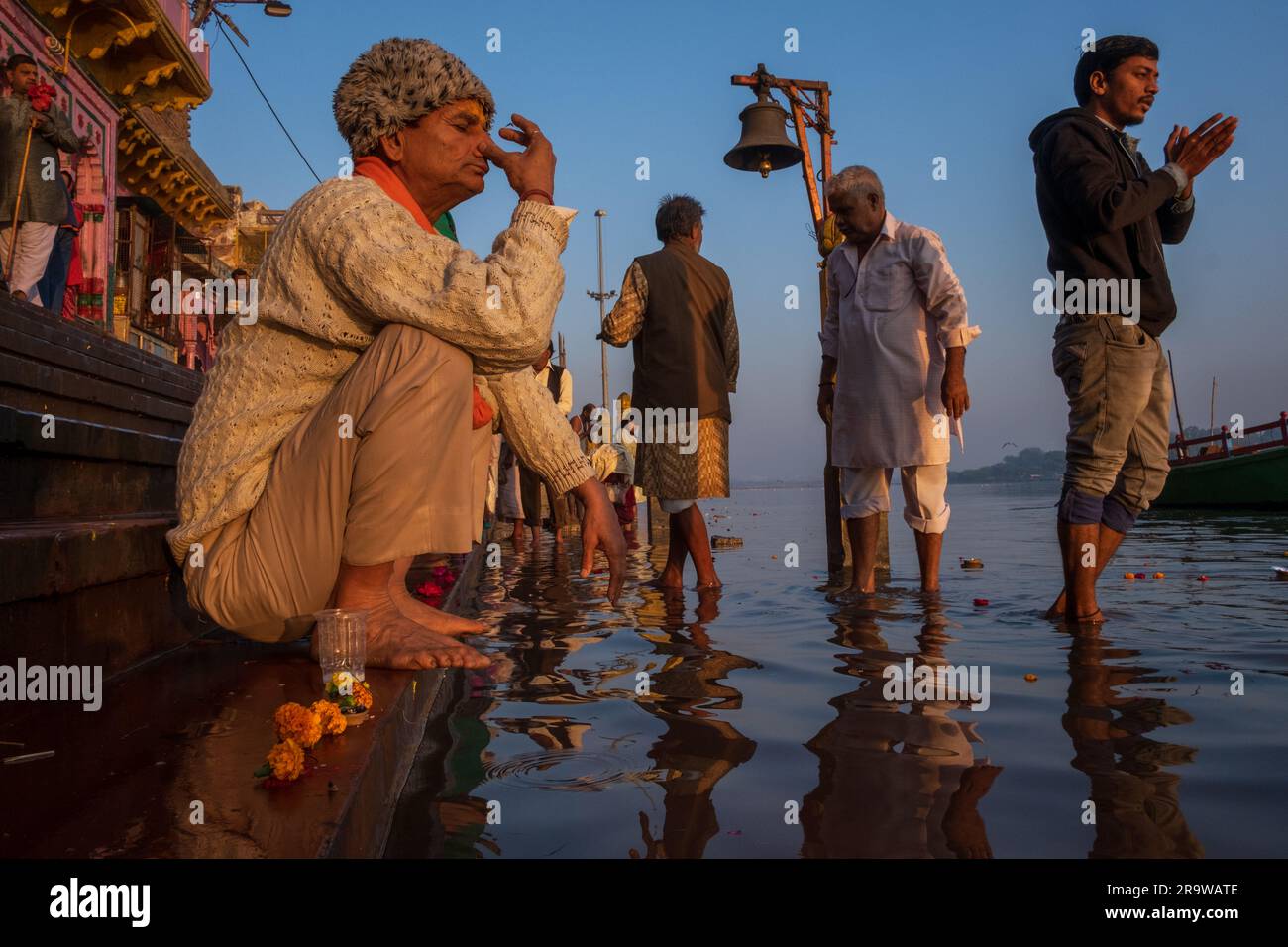
The riverside aarti was the quietest part of the day, oil lamps drifting on the water while the last light went out over the far bank. Our guide from the Vrindavan temple tour timed our arrival so we had a step to sit on rather than standing at the back. Bring a thin scarf, the breeze off the Yamuna gets cool.
We came in January and the mornings were foggy and cold, maybe twelve degrees, which kept the lanes calm. The rickshaw ride between the outer temples was bumpy but honestly half the fun. Good introduction to the Mathura and Vrindavan landmarks for a first visit.
Eight of us, one guide, no rushing. Vrindavan Tours handled the temple entry logistics so we never stood around wondering where to go, and the pace let us actually sit inside a courtyard for twenty minutes rather than just filing through. The garland market at the end was the highlight for my mother.
Incense, bells, cows in the road, and about four different kirtan groups audible at once. It is genuinely overwhelming for the first hour and then it becomes rhythmic. Our Braj Bhoomi darshan yatra covered more ground than I expected on foot.
Late August meant humid air and sudden showers, but everything was green and the crowds were thinner. The stone underfoot in the temple courtyards was slippery so go slowly. We used Vrindavan Tours again for a second day and asked for the quieter outlying shrines, which they arranged without fuss.
Heat in June is serious, so the pre-dawn start was not optional. Watching the first arti of the morning with maybe thirty other people present felt entirely different from the midday crush we saw later. The skip-the-line Vrindavan temple access saved us an hour we spent drinking chai instead.
Everything you need to know for your journey
Banke Bihari Temple is open daily from 07:45 to 12:00 and again from 17:30 to 21:30, and most Vrindavan Tours build their darshan stop around these two windows.
No, entrance is completely free at 0 INR, and darshan is open to all devotees without any ticket or paid VIP pass.
The 07:45–09:30 window right after morning opening is the quietest stretch before crowds build toward the Rajbhog Aarti period near noon.
Bags undergo security checks at the entrance, and photography or video of the deity inside the sanctum is not permitted, though phones can be used outside the inner darshan area.
Modest clothing covering shoulders and knees is expected, along with removing footwear before the final approach lane.
Yes, families are welcome, though the narrow lanes and crowd crush near midday mean younger children should be kept close at hand.
No, food and drink are not permitted inside the temple precinct itself, though prasad from the temple or licensed nearby stalls is available.
Most travelers reach Mathura Junction by train first, then take a taxi, auto, or shared transport covering the roughly 12-14 km to Vrindavan in about 25-45 minutes.
Since darshan itself carries no fee or booking, there's nothing to cancel at the temple; any refund only applies to a separately booked transport, guide, or hotel package.
The temple has narrow, uneven lanes and steps with no ramps, so mobility-limited visitors should plan extra time and ideally visit during the quieter morning window.
Nidhivan, Seva Kunj, Radha Vallabh Temple, ISKCON Temple, and Prem Mandir are all within a short walk or ride, making it easy to combine several stops on one visit.
Yes, there is a long midday closure of roughly five to six hours between the morning and evening darshan sessions, rooted in the tradition that Bihari Ji rests during the afternoon.
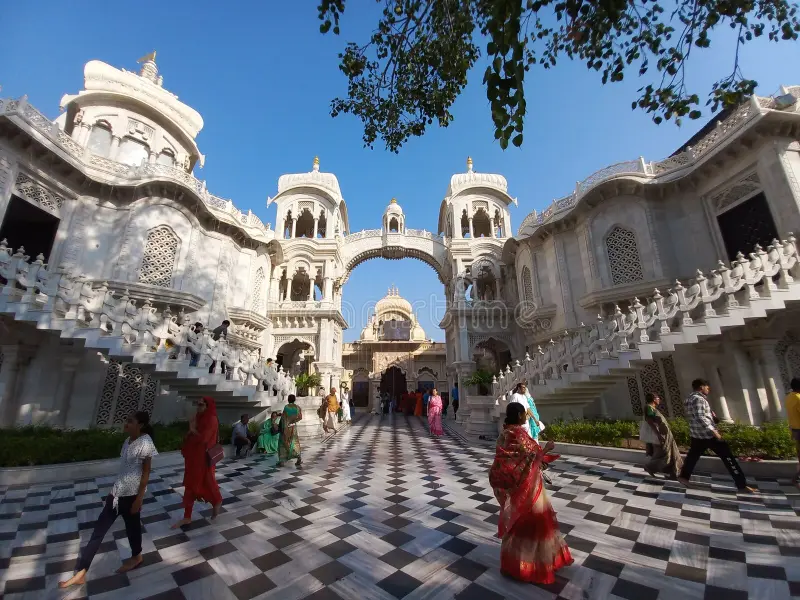
A large Krishna-Balaram temple complex known for its marble architecture and daily kirtan sessions, located near Bhaktivedanta Swami Marg. It draws devotees for its calm morning atmosphere distinct from the crowded jhanki style at Banke Bihari.
A large marble temple complex famous for intricate carvings depicting scenes from Krishna's life and an illuminated evening fountain show. It sits roughly 2 km from Banke Bihari Temple.
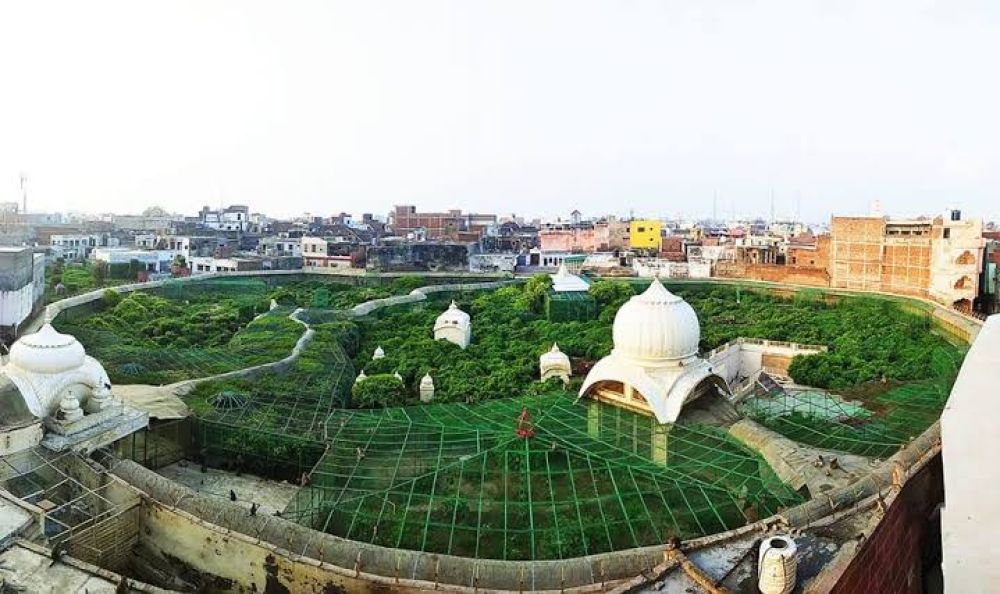
A dense, mysterious grove associated with Krishna's Raas Leela legends, where the trees are said to bend and intertwine in a distinctive pattern. The gates close before dusk based on local tradition.
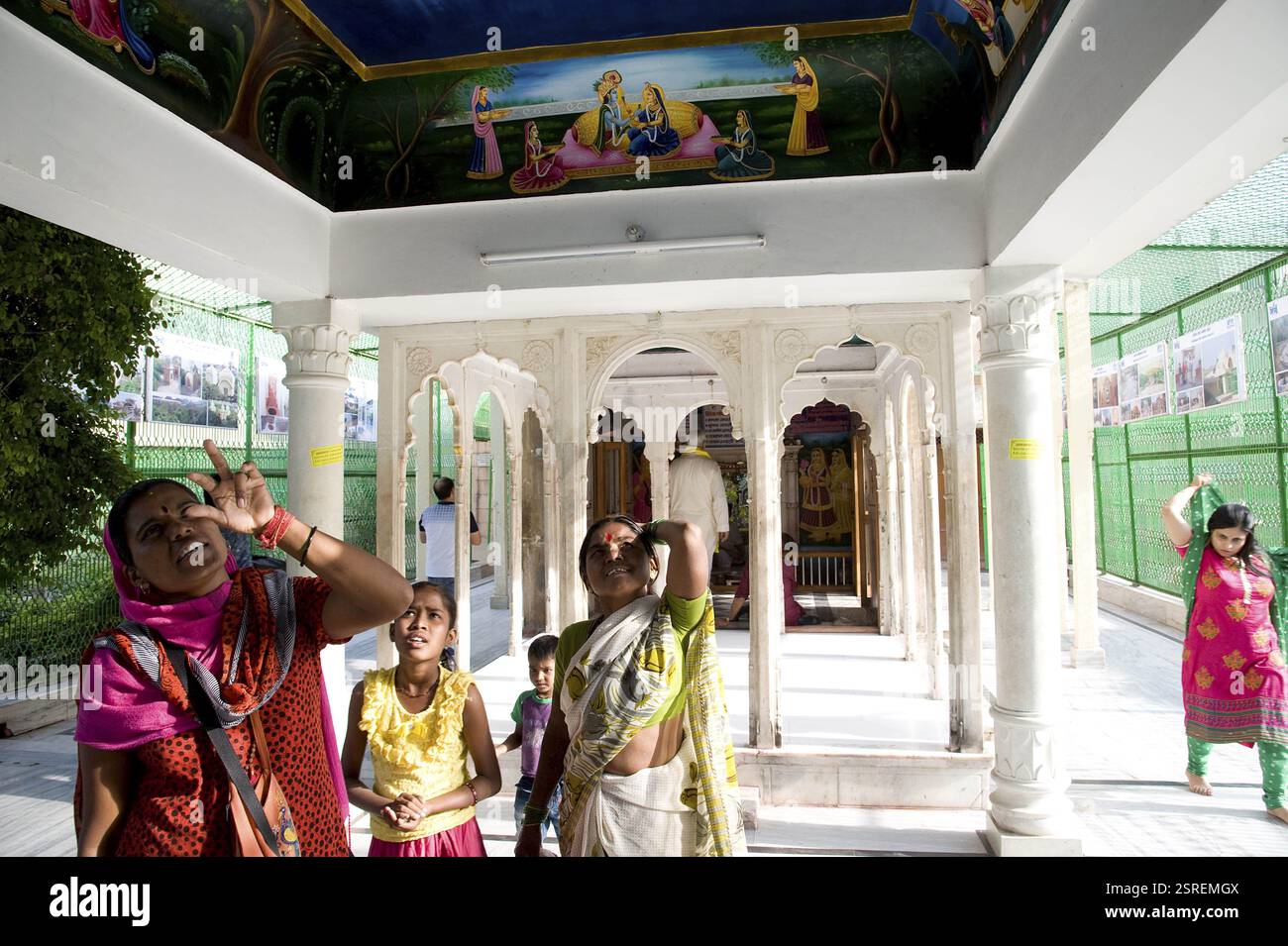
A small grove and shrine near Nidhivan believed to be the resting spot of Radha and Krishna after the Raas dance. It's a quiet stop typically combined with a Nidhivan visit.
One of Vrindavan's older Krishna temples, notable for having no idol of Krishna and instead worshipping his crown alongside Radha's image. It reflects a distinct theological tradition within Vaishnavism.
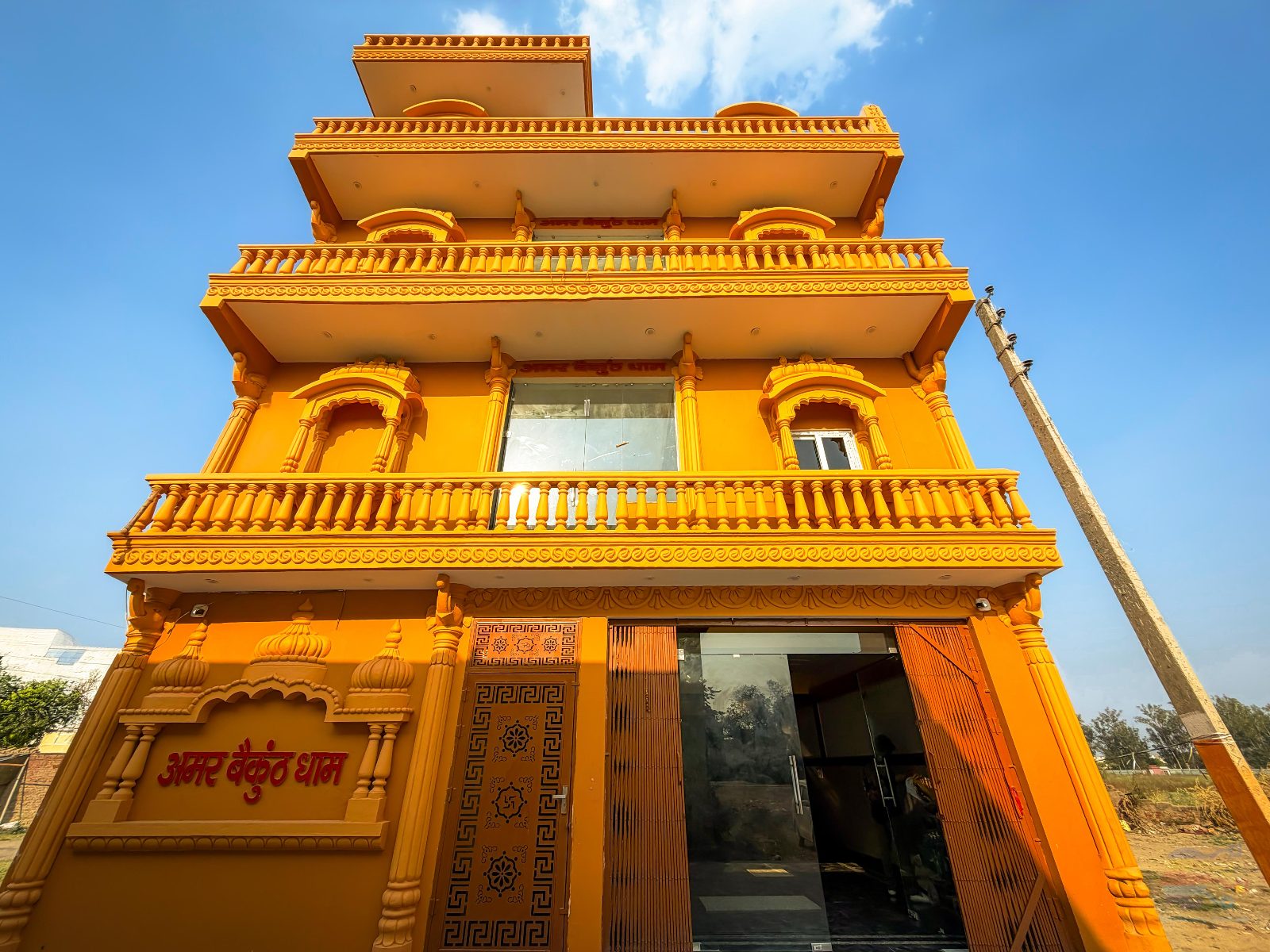
Numerous budget guesthouses and dharamshalas cluster within a short walk of the main temple lanes, popular with pilgrims on short Vrindavan Tours.
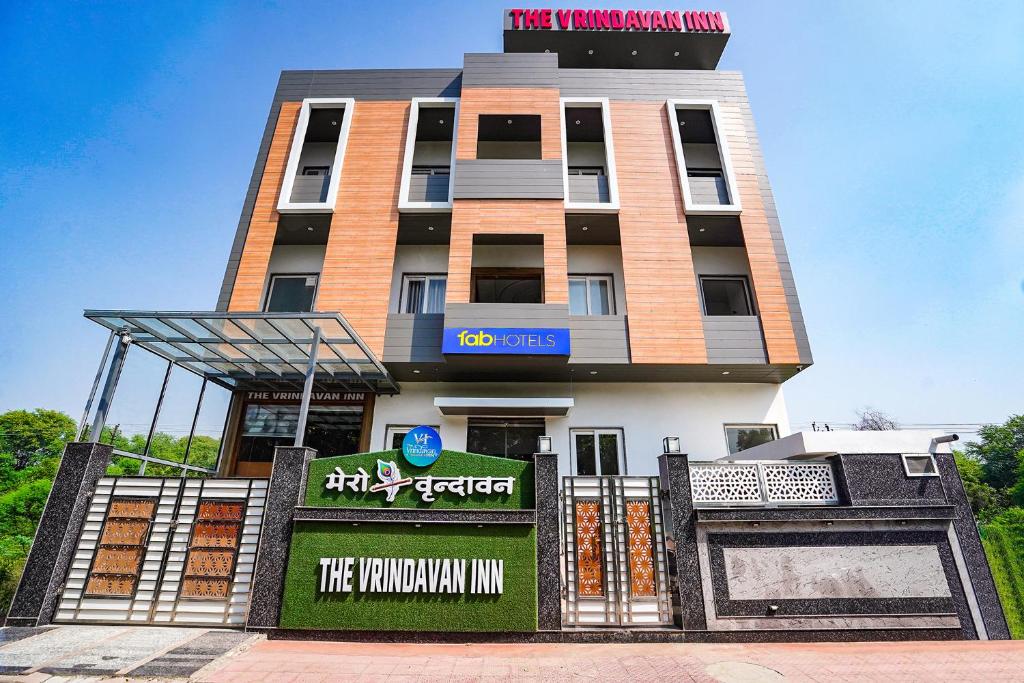
A stretch of mid-range hotels along the Mathura-Vrindavan road offers more modern amenities than the old-town guesthouses.
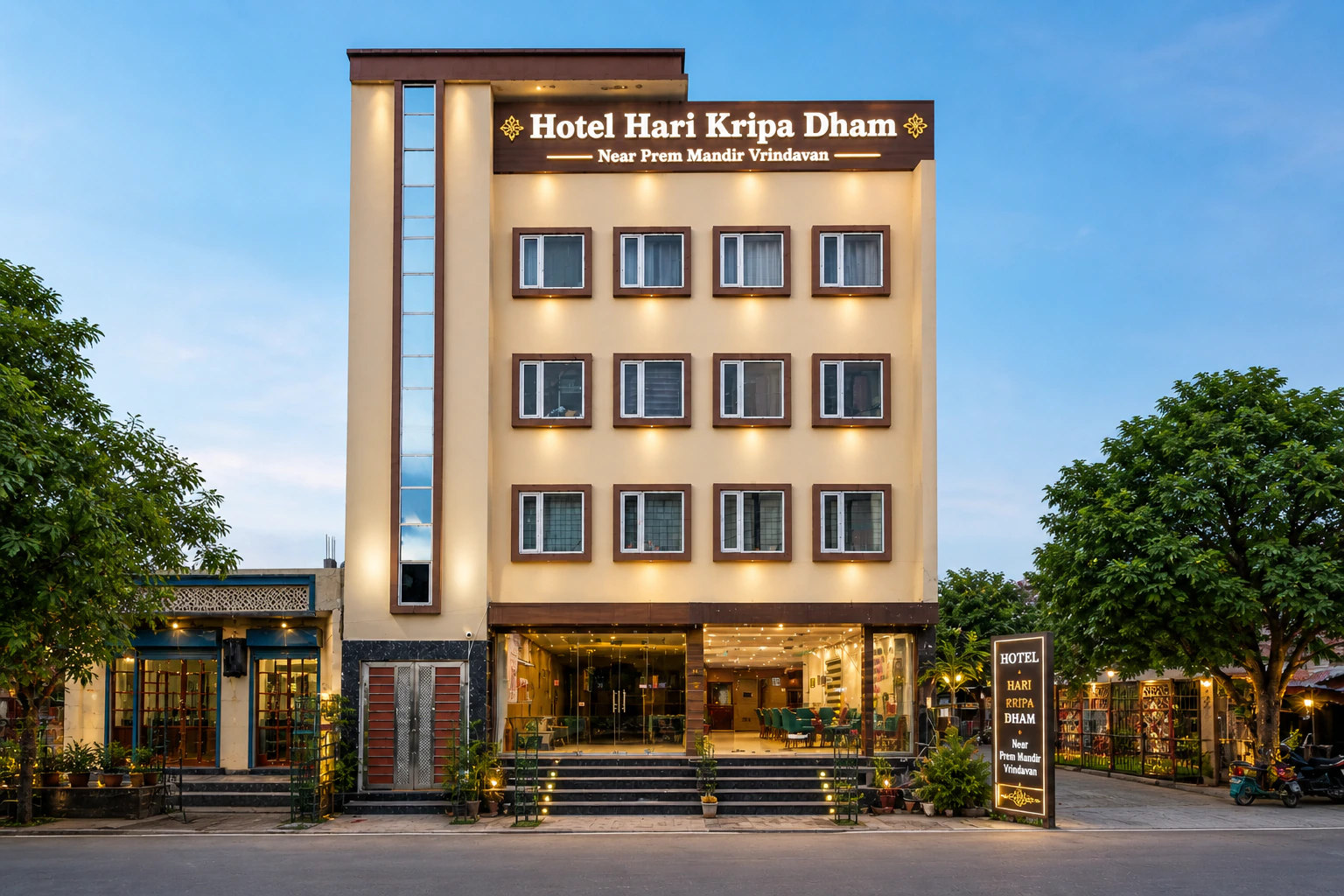
Several boutique and mid-range properties have opened near Prem Mandir, offering a quieter base than the dense old-town lanes.
Join thousands of happy travelers who have discovered this incredible experience
Book Your Experience Now